
by Susan Crudgington
I belong to an organization called The Initiative to Educate Afghan Women, which was started ten years ago by a woman named Paula Nirschel. Paula was horrified by the news reports coming out of Afghanistan of young women kept from schools by the Taliban. She scoured this country for scholarships and that first year, brought four Afghan women to the US for college.
Since that first year, we have educated almost 80 students. We select young women who are passionate about learning and who want to contribute to the betterment of their country. As a group, they are the most impressive young women I have ever met. They are determined to make the most of their opportunity here in the US. They attend colleges from Vermont to North Carolina. Our list of colleges includes Middlebury, Holy Cross, Russell Sage and Mary Washington, to name a few.
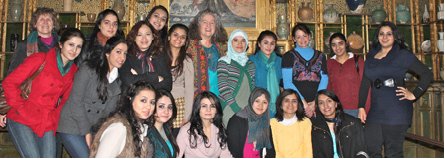
We gather all our students together again at Intersession in January. This time they all come to Washington and spend a week visiting everything they can. We find a suites hotel and all our students cram into rooms together, sharing their experiences, and best of all, cooking food from home every single night.
[quote_right]They know the value of their education as so many of their relatives will do without one, and they are determined not to miss one opportunity while here.[/quote_right]We require that our students return home to Afghanistan every summer. This is a very important part of our program. Our students miss their families and their culture very much during the year and their trip home in the summer renews and strengthens them for the following year. It also helps to reassure their families that their daughters are not being changed for ill here in America. Many of our students have fought considerable odds to attend school in the US. They have suffered the disapproval of male relatives or village elders. Many of our students worked to support their families, so their time in the US is financially difficult for their families. Their trips home in the summer have, time and again, convinced doubting relatives that their daughters have not been corrupted because of becoming educated, but have become stronger, better Afghan citizens. We have had uncles who disapproved of a niece’s participation, see his niece during the summer and ask to send her cousin the next year. One by one, these young women change minds.
They change minds here in the US, too. They are superlative students. They take every opportunity to teach their fellow students (and professors) about their religion and their country. They fill the honor societies of their schools, the leadership positions of clubs and organizations and are the first to offer themselves for community service projects. They know the value of their education as so many of their relatives will do without one, and they are determined not to miss one opportunity while here.
We have 30 students in the US this year. We will graduate 9 in the coming weeks. I’m looking forward to attending graduation at St. Mary’s in two weeks for two of our seniors. We will be taking two new students next year.
When our students get off the plane for the first time, they are mostly covered, head to toe. They find it hard to look anyone directly in the eyes and speak with their heads lowered. When we meet them at Intersession in January, they look like any group of college students. They are full of opinions. They talk non-stop. They want to see and do everything. They stand up straight and look you in the eye when they speak. And they speak with confidence. There is no doubt that they are the future of their country, and I am very fortunate to have a small part in their success.
Discover more from Forest Hills Connection
Subscribe to get the latest posts sent to your email.